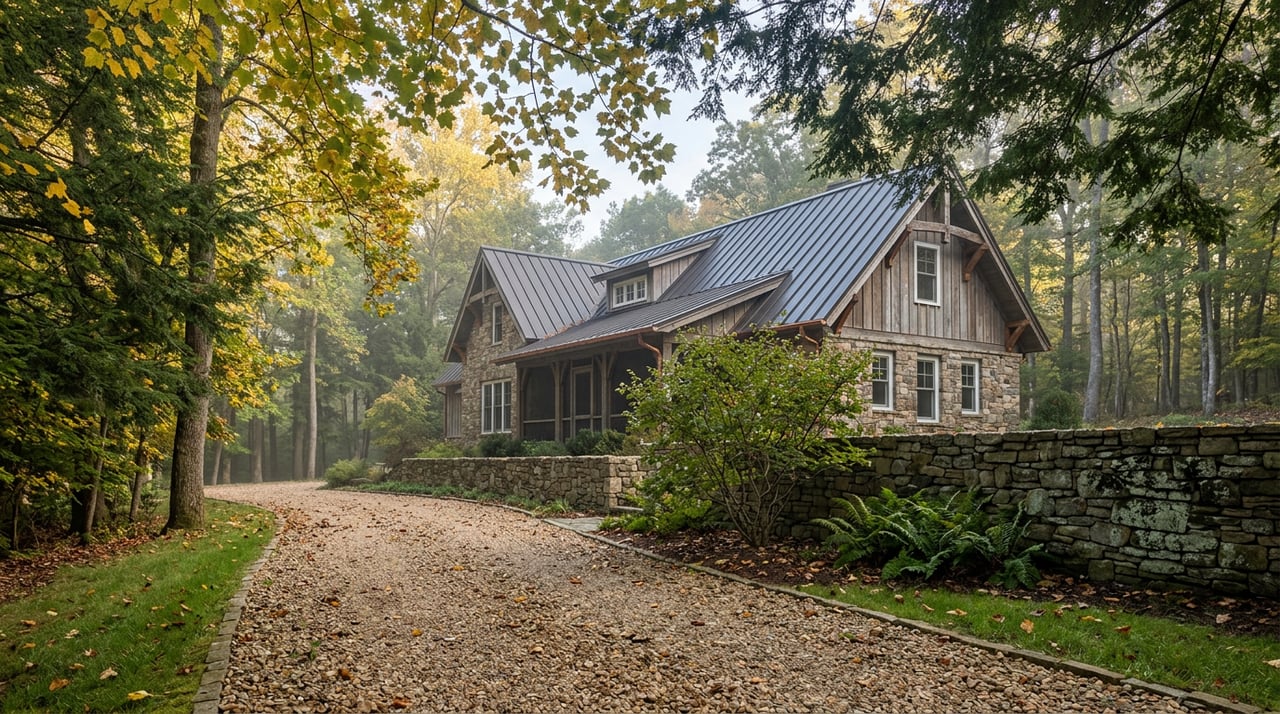
Two Nearly Identical Lots In Walland. Only One Can Ever Be A Rental.
Picture two five-acre lots in Walland, both gated, both wooded, both a short drive from Blackberry Farm. One listing says "septic site approval on file." The other says "soil test completed." A buyer scanning both on a Saturday afternoon would reasonably assume they're looking at the same product with two different sellers describing it differently.
They're not. One of those phrases means a state permit has already cleared. The other means someone paid a soil scientist to look at the dirt and nothing has been filed with the county yet. The gap between those two sentences is the difference between breaking ground next spring and spending the winter waiting on paperwork.
That gap is the whole story in Walland right now. Land here sells fast, prices are climbing on the strength of Blackberry Farm's name recognition, and the marketing language across dozens of active listings uses the words "approved," "on file," and "tested" almost interchangeably. They are not interchangeable. And buried in the same listings is a second gap that matters even more if you're counting on rental income to help pay for the build: some of these gated communities forbid short-term rentals outright, while listings two miles away lead with rental income as the reason to buy.
In Tennessee, a septic system for a new home requires a construction permit before anyone can build, and the Tennessee Department of Environment and Conservation oversees that permit statewide. In Blount County, where Walland sits, that process runs through the county's own Environmental Health office rather than a regional state field office. Blount is one of nine counties in Tennessee set up this way, alongside Davidson, Hamilton, Jefferson, Knox, Madison, Sevier, Shelby, and Williamson.
Here's what actually happens on the way to that permit. A soil scientist or septic installer evaluates the proposed drain field, checking soil type, depth to rock, and how fast water moves through the ground. If the soil percolates slower than 75 minutes per inch, state rule requires an actual percolation test, not just a soil map. Each percolation hole only certifies a 50 by 50 foot block of ground. Fail one, and that block is off the table for septic use, which is why the state also requires a full second area, a 100 percent reserve, in case the first system ever fails.
Once TDEC or the county has a complete application, a site evaluation, and a site plan, processing can still take up to 45 days. Only after that does a licensed installer build the system, the county schedules a final inspection, and TDEC issues a Certificate of Completion.
So when a listing says "septic site approval on file," ask which stage that describes. A private soil consultant's site evaluation is not the same document as a county-issued construction permit, and neither one is the Certificate of Completion that means the system is actually built and inspected. All three show up in listing copy as some version of "approved." Only one of them means you can call an installer tomorrow.
| Listing language | What it usually means | What's still ahead |
|---|---|---|
| "Soil map on file" | A soil scientist assessed the ground | Permit application, possible perc test, county review |
| "Septic site approval on file" | County or state has approved the site plan | Installer hired, system built, final inspection |
| "3BR septic approval" | A permit ties the system size to bedroom count | Construction must match that bedroom limit or the permit needs revising |
| "Certificate of Completion" | The system is installed and inspected | Nothing, you're ready to build the house |
Saddle Ridge, one of the larger gated communities off East Millers Cove Road, spans more than 1,200 acres divided into roughly 225 lots of five acres or more, with about 75 residences occupied year round today. The property owners association maintains close to 16 miles of gravel road across that footprint, funded by annual dues and, when someone is ready to build, a nonrefundable Road Impact Fee of $3,000 charged directly by the association.
That fee doesn't show up in the per-acre price anyone quotes when comparing lots. Neither does the reality of the roads themselves. Saddle Ridge's own community materials are candid about it: gravel roads get dusty in dry months and can turn to ice in winter, four-wheel drive is recommended, and residents who commute sometimes stay in town during bad weather rather than risk the drive out. None of that is a reason to avoid the community. It's a reason to build the road fee and a truck payment into the same budget as the lot price, rather than discovering both after closing.
Homestead West, another gated Walland community bordering Blackberry Farm, takes a different approach, offering more than 300 acres of shared greenspace with walking trails as its main amenity draw rather than a fee tied to construction. Two communities, both gated, both minutes from the same resort, structured differently enough that comparing them by price per acre alone tells you almost nothing about what owning there actually costs.
This is the part that catches buyers by surprise most often. A lot of Walland land marketing leans on Blackberry Farm's name and the idea of building a getaway that could also earn rental income when the owner isn't using it. That pitch works in some communities and is flatly prohibited in others, and the difference isn't visible from the road.
Saddle Ridge's governing documents restrict rental properties, along with RVs and motorcycles, as part of keeping the community geared toward long-term residents rather than turnover guests. That's a real constraint for anyone whose plan depends on Airbnb income covering part of a mortgage. Meanwhile, other Walland-area listings, some just a few miles down Highway 321, market themselves explicitly around short-term rental potential, income-producing cabins, or "STRs allowed" as a selling point.
Neither approach is right or wrong. But a buyer who assumes every gated Walland property works the same way risks building a financial plan around income the covenants won't let them collect. The fix is simple and unglamorous: read the actual CC&Rs for the specific subdivision before writing an offer, not after. If rental income is part of your math, get that answer in writing before you're under contract, not after you've paid for a soil test.
If a perc test already passed, does that guarantee I can build? It confirms that specific 50 by 50 foot block of ground can support a septic drain field. You still need the full permit application, a site plan, and county approval before construction, and the state also requires a reserve area for a future system if the first one ever fails.
Can a community add short-term rental restrictions after I already own land there? Covenants can be amended, usually through a vote process defined in the community's governing documents. That's a question for the specific subdivision's board and bylaws rather than something a general guide can answer, which is exactly why reading the current CC&Rs before purchase matters more than relying on what a neighbor or listing agent tells you verbally.
Is Blount County's permit process slower than other East Tennessee counties? Not necessarily slower, but it is administered locally through the county's own Environmental Health office rather than a state regional office, which means the office you call and the forms you file are specific to Blount County even though the underlying rules come from the state.
Land in Walland moves fast, and the paperwork behind it moves at its own pace. If you're weighing a lot here, whether it's in Saddle Ridge, Homestead West, or one of the smaller communities tucked into the same foothills, it's worth walking through the septic status, the covenant language, and the actual fee structure with someone who knows which questions to ask before you're three weeks into a contract. Robin Skeen has spent nearly thirty years working these communities and can help you read a listing for what it actually says, not just what it's trying to sell you. Reach out to start that conversation before you make an offer, not after.
Stay up to date on the latest real estate trends.

Buying and selling real estate can be a stressful life event. Let 30 years of experience work for you! Robin can assist you in working toward a successful transaction.